If you’ve ever opened a cabinet in your camper and found chewed-up insulation, mystery droppings, or – worse – a very startled mouse staring back at you, you already know this isn’t a problem you can ignore. Mice don’t just gross you out; they chew through wiring, insulation, and upholstery, and once they’ve decided your RV is a good winter home, they are genuinely hard to evict.
Trust me, living in Idaho it feels like a yearly migration!
The good news is you don’t need poison or a professional to keep them out. Below are the products that actually work for keeping mice out of a camper, RV, or travel trailer – starting with the two that RV owners (including our own readers) reach for again and again.
| Category | Pick | Why We Recommend It |
|---|---|---|
| Best Overall | Grandpa Gus’s Mouse Repellent Spray | Plant-based, pet-safe, easy to reapply before every trip |
| Best for Sealing Entry Points | Copper Mesh Hole Filler | Stuffs gaps mice can’t chew through |
| Best No-Kill Option | Humane Catch-and-Release Traps | Catches mice already inside without killing them – good if repellent alone isn’t enough |
| Best Electronic Option | Plug-In Ultrasonic Repellers | No scent, no mess, works while you’re away |
| Best Budget Pick | Peppermint Oil + Steel Wool | The cheapest way to start today |

1. Grandpa Gus’s Mouse Repellent Spray
This is the one we recommend first, and it’s also the one our own readers buy the most. It’s a plant-oil-based spray (peppermint and other essential oils) that you apply directly to cabinets, wheel wells, storage bays, and anywhere wiring is exposed. Mice hate the smell; you probably won’t mind it at all.
Why it works for RVs specifically: it’s safe to spray around food storage and pet areas once dry, which matters in a space as small as a camper where everything is close together. Reapply every couple of weeks or before storage.
2. Copper Mesh Hole Filler
Spray and scent repellents only work if mice can’t just walk in through a gap in the first place. Copper mesh is the fix: it’s a roll of coarse copper wool you stuff into any hole, gap, or wiring pass-through under 1/2 inch. Mice can chew through wood, plastic, and even steel wool eventually – they cannot chew through copper mesh.
Where to use it: around pipe and wire entry points underneath the RV, gaps near the water heater and furnace access panels, and anywhere you see daylight from inside a storage bay. Pair this with a scent repellent above for a complete approach – mesh blocks the entry, spray discourages the ones already looking.
3. Motel Mouse No Kill Traps
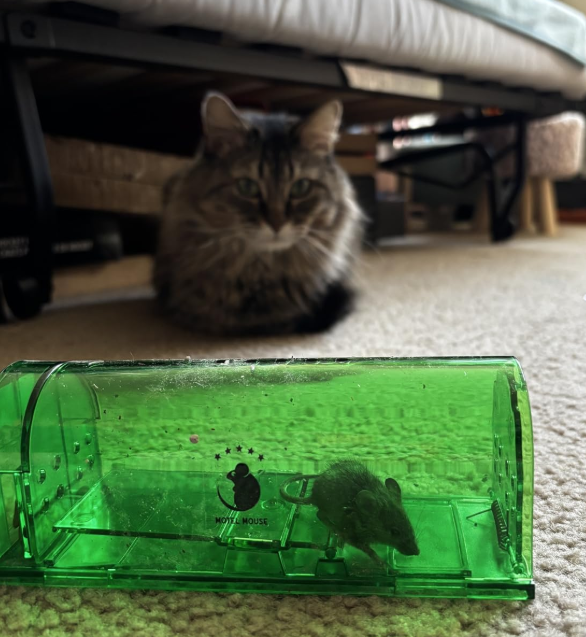
Repellents are great at keeping new mice from moving in, but if you’ve already found signs of one inside, you need something that actually catches it – not just discourages it. No-kill traps let you catch mice alive and release them well away from the RV, which is the better option if you’d rather not deal with a kill trap, especially with kids around.
Where to use it: set them along cabinet edges and baseboards where you’ve seen droppings or chew marks, baited with peanut butter or seeds. Check them daily – a mouse left in a live trap too long is stressful for everyone involved, including the mouse.
4. Plug-In Ultrasonic Repellers
These plug into any standard outlet and emit a high-frequency sound that’s inaudible to humans and pets but irritating to rodents. They’re a good layer to add if your RV is hooked up to shore power in storage, since they run continuously with zero maintenance – no scent to fade, no spray to reapply.
Worth noting: ultrasonic repellers work best as a deterrent alongside sealing entry points, not as a stand-alone fix if mice are already established inside. There are mixed reviews about their effectiveness, but some people really stand by them!
5. Peppermint Oil + Steel Wool (Budget Option)
If you want to start tonight without ordering anything, this combo gets you most of the way there for a few dollars. Soak cotton balls in peppermint essential oil and tuck them into cabinets and storage areas, and stuff steel wool into any gaps you can find underneath the rig. It’s not as durable as copper mesh (steel wool can rust over time) and needs more frequent reapplication than a dedicated spray, but it’s genuinely effective as a stopgap or a first line of defense.
How to Actually Keep Mice Out (Not Just Repel Them)
Repellents work best as part of a system, not a one-and-done fix –
- Seal first, repel second. Walk the underside of your RV and seal every gap bigger than a pencil – mice can squeeze through surprisingly small openings.
- Store food in hard containers, not bags. Cardboard and plastic bags are an invitation; glass or hard plastic isn’t.
- Don’t skip storage season. Most infestations happen while the RV is sitting, not while you’re using it. Treat before you park it for winter, not after you find a problem in spring.
- Combine methods. Spray or pouches plus sealed entry points plus an electronic repeller covers scent, physical access, and sound – mice that get past one layer usually don’t get past all three.
Frequently Asked Questions
What actually keeps mice out of an RV?
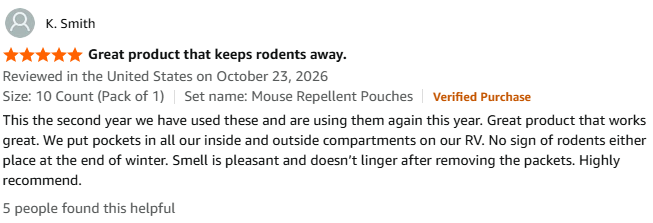
A combination of sealing entry points (copper mesh works best) and a scent deterrent like peppermint-oil spray or Fresh Cab pouches. Sealing without repelling just means mice look harder for a new gap; repelling without sealing means you’re reapplying forever.
Is Irish Spring soap effective for keeping mice out of a camper?
It’s a popular tip, but it’s one of the least effective options – the scent fades fast and mice have been documented nesting right next to bars of it. A dedicated rodent repellent lasts longer and is actually formulated for this.
How often should I reapply mouse repellent in my RV?
Sprays: every 1-2 weeks, or right before any storage period. Scent pouches: every 30-60 days. Copper mesh and sealing work indefinitely once installed correctly.
Are these repellents safe with pets and kids in the RV?
Once dry, plant-oil-based sprays and scent pouches are generally considered pet- and kid-safe, but always check the specific product label, especially if you have cats, since some essential oils (including concentrated peppermint) can be an issue for them in large amounts.

- Best Mouse Repellents for RVs & Campers (Our Top Picks) - October 29, 2026
- Camping Mad Libs – 6 Printable Stories Kids Will Love (+Free PDFs!) - March 31, 2026
- Camping Would You Rather Questions + Free Printable (65+ Ideas for Kids, Teens + Adults!) - March 29, 2026