
Updated November 2026 by Stacy B. – new this year: a quick-reference chart, signs of mice, where they get in, two new live-catch traps, a safe cleanup guide, a winter storage checklist, and an FAQ!
Once you see that first mouse poo in your camper, it’s hard to think of much else besides the fastest way to get rid of the problem… especially when that bar of Irish Spring soap you dutifully put everywhere is covered with teeth marks!
Whether you’re prepping your RV in spring or the cool temperatures of fall are pushing the mice in, having mice in your camper can be infuriating! Attempting to block all the entrances of your camper can be hard, and fully getting rid of them can feel even harder.
The short version: seal the holes first, use repellents so mice don’t want to move in, and use live traps that you check daily to get rid of any that are already inside. Here we go!

Table of Contents
Quick answer: what works (and what doesn’t)
A combination of preventative and active measures is best, but doing at least one of these should help a lot! If you’re doing this in prep for winter, then be sure to check out my winter RVing tips here!
| Method | Best for | My take |
|---|---|---|
| Seal holes with copper mesh + foam | Prevention | The only foolproof way to keep them out – do this first |
| Live traps (checked daily) | Already inside | My top pick |
| 5-gallon bucket roller trap | Already inside | Huge success at my mother-in-law’s ranch house – live catch if you leave out the water |
| Clear enclosed traps | Already inside | Easy to check, and no mess on your floors |
| Ultrasonic repellers | Prevention | Most mice cleared out in about a week – one per space |
| Store food in containers | Prevention | Takes away the snacks (and the smell) |
| Grandpa Gus spray | Prevention | No chemical smell, pet and kid safe |
| Fresh Cab | Prevention | Hit or miss – forum reports go both ways |
| Undercarriage lubricant | Prevention | Interesting, but you need an air compressor |
| Fox or coyote urine | Prevention | Mice smell a predator and move on |
| A cat | Prevention | Even the smell of a cat helps |
| Fake snakes | Prevention | Reader tip – fun to try |
| Dryer sheets | Prevention | Rarely works |
| Irish Spring soap | Skip it | Mine ate it |
| Cornmeal + baking soda, cedar oil | Last resort | Not humane – only when nothing else works |
Check out this article for the best buyable options to keep mice out of the RV!
Does Irish Spring soap keep mice away?
Short answer: not in my experience. Every Facebook group and forum will tell you to put bars of Irish Spring soap all over your camper, so I did… and the mice used it as a snack. A bar of soap covered in teeth marks is a pretty clear sign it isn’t scaring anything away!
If you already have some out, it won’t hurt anything, but don’t count on it. Put your effort into the steps below instead.

Signs you have mice in your RV
Mice are sneaky and mostly come out at night, so you usually find the evidence long before you ever see one. Look for:
- Droppings in cabinets, drawers, and behind or under appliances
- Chewed food packaging, paper goods, soap, or wiring
- Nests made of shredded paper towels, toilet paper, or insulation
- Scratching or scurrying noises at night, especially in walls and ceilings
- A musty, ammonia-like smell in closed-up spaces
- Pets fixated on one cabinet or corner
Spotted any of these? Skip ahead to getting rid of mice that are already inside, and then read the safe cleanup steps.
How mice get into your RV
Mice can squeeze through a gap about the size of a dime, so tiny holes are all it takes. The most common ways in:
- Where pipes, hoses, and wiring come through the floor
- The underbelly – gaps, torn or missing material, and around the tanks
- Utility hatches and compartment doors (power, water, and dump hookups)
- Refrigerator, furnace, and water heater vents and exhaust ports
- Slide-out seals, door seals, and window gaps
- Tires, jacks, and stabilizers they can climb (or branches touching the roof)
- Your power cord and hoses when you’re hooked up
Not sure where yours are getting in? Try the night trick in the tips at the end – crawl under your camper with the lights on inside and look for where light shines through.
Step 1: Seal every entry point (the only foolproof fix)
Deterrents tend to be a much easier, cheaper fix so we tend to look there first. However, if you want to take care of your RV for the long term, it’s best to spend the time and do it right as soon as you can. This means to physically block all holes leading from the outside!
Some people create custom steel/steel wool “collars” to place around each wire/tube while others use a simpler method, such as a special spray foam. Vent holes should also be covered by a fine but strong mesh!
Copper Mesh – won’t rust like steel wool
Steel Wool is a popular, budget friendly option, but I wanted to focus on copper mesh since it doesn’t rust and, because of the way it’s woven, gets stuck in the mice teeth so they can’t chew through it near as easy as steel.
Plugging every hole under your camper with copper mesh is a great way to prep for long term storage over winter – it’s very durable and won’t run out of scent. The most thorough way to use this solution is to go under your camper with a flashlight and plug every hole with a mesh spray/tape combo.
When looking at the underbelly, make sure to check near wiring, hoses, pipes, and tanks as these are common places to have small holes (and mice can squeeze through something the size of a dime!)
I love that this copper mesh set includes a packing tool!

Pest specific spray foam mice won’t chew through…. very often
Spray foam is an easy way to fill in all the little gaps that are too annoying to do with the mesh, especially when there is a mouse specific one! There seem to be mixed reviews about the effectiveness, so I’d recommend pairing it with the mesh if possible (stuffing the holes with mesh then spraying a layer of foam as a sealant).
Here is Tomcats foam mice barrier spray that has pretty decent reviews – it’s trimmable and paintable, so it’s easy to make it look nice and seal tight.

3D Printed Custom Utility Hatches
Not everyone has access to a 3D printer, but there are plans uploaded such as these that you can get printed through a variety of services.
CreativeRVSolutions 3D prints these pretty sweet custom RV Hatch covers that look like they would work well (+ there are a ton of positive reviews to support that!) if you like the idea!

Step 2: Make your RV less inviting to mice
Once the holes are blocked, make sure there’s nothing worth sneaking in for, and give them reasons to stay away.
Keep your dry foods and paper goods stored in plastic or glass
Cereals, crackers and chips are some of a mouse’s FAVORITE snacks (or… atleast in my own experiences) so make sure to store your bags of dry food either in a larger plastic tub OR in small plastic containers of their own. If they are airtight, this is even better as your food will stay good longer and there will be WAY less smells to attract mice!
The same idea applies to your toilet paper/paper towels etc – mice love how easy it is to tear apart these items and use them for bedding. Make sure you store them off the ground and in a bin (or just bring them in for the winter!)

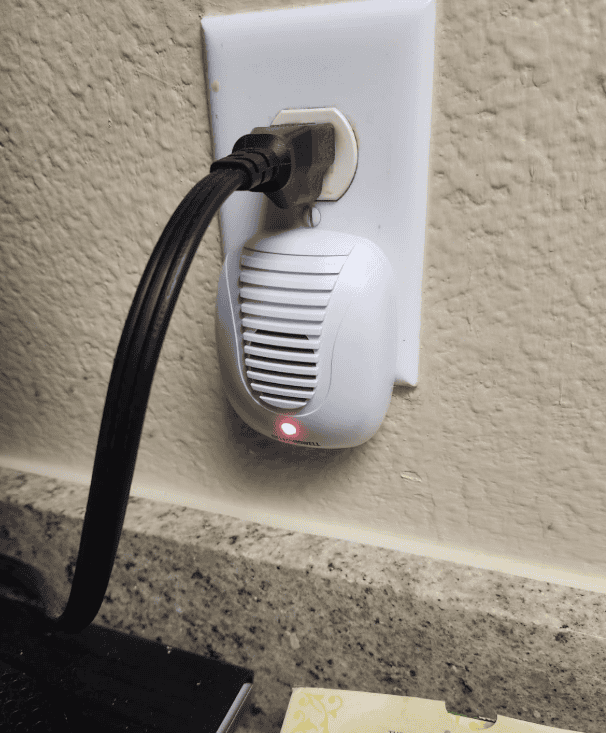
Electronic repellants (Plug in for indoors, solar powered for outdoors!)
The easiest option as there are no sprays or work involved, these work by emitting a certain frequency that drives mice and other pests crazy. It seemed in less than a week, most mice clear out of the area and stay out.
This 6 Pack of Ultrasonic Pest Repellers should be more than enough to cover the space you need – make sure to do one per space as the frequencies cannot penetrate the walls!
This solar powered repeller is motion activated and is a great option for extra outdoor protection at your seasonal campsite or storage spot!
Grandpa Gus Spray Deterrents (peppermint and cinnamon essential oils)
This option is WONDERFUL because it leaves no chemical smell (only uses essential oils!) and is pet/kid safe. Besides RV’s, I’ve seen people use Grandpa Gus products in places like their barns and dog houses too… all without any fuss from the other animals!
Use the Grandpa Gus Spray on the entrances/exits of your camper. Make sure to spray a little extra around any problem areas you’re aware of (such as where wires and pipes come in). For extra potency, soak some cotton balls with the spray and put them in something with restricted airflow (such as these tins J.H. used) so that the smell stays longer!

Place “Fresh Cab” in all the cabinets
Every year I see mice prevention discussed in RV forums, it seems this is a hit or miss. For example, someone said that Fresh Cab was “the only thing we found to defeat every rodent” in the same comment thread as someone else who said “Nope, tried that. They chewed holes in them!”
What keeps the mice away will differ for each camper… this particular method uses balsa fir oil soaked plant fibers. In an enclosed place like cabinets/winterezed RV, I expect they would last the full 90 days!

Spray your undercarriage with special lubricant
Another idea for your mouse repellent arsenal – a special mouse repelling spray that’s too slippery for mouse to climb on! It’s non toxic and says it’s not messy, however I want to point out that you are meant to SPRAY this product on with an air compressor UNDER your camper!
So, if you have an air compressor and don’t mind scooting around your RV’s undercarriage, this undercarriage lubricant is an interesting solution!

Fox or Coyote Urine (Yes, you can buy this!)
It sounds gross, but having mouse poop in your camper is usually gross enough to motivate you to try anything! This system works just as you think – the mice smell a predator nearby and don’t tend to stick around.
With a spray system such as PredatorPee, you can line the perimeter + use the included scent tags to create a “Pee-rimiter” (LOL) around your camper. And for those squeamish about spraying it, there are also dried shaker versions too!

Get a kitty (if one fits in your lifestyle!)
Even if your cat is the most spoiled, inside cat that ever was, just having the smell of a cat (and it’s urine!) around will be a big deterrent to mice. If you happen to have a cat that knows how to handle mice… even better!
We have LOVED camping with out cat, and it’s definitely one of the benefits we enjoy (besides his overall cuteness, of course =P)


Fake Snakes… I’m not joking!
You’re not the only one who would lose their cool if they saw what looked like a snake – apparently, this works for mice too! I update this article yearly as I hear of/try new tricks, and I literally laughed out loud when I saw this comment… and the pictures to back it up!


Step 3: Get rid of mice that are already inside
Sometimes you just need the mice out now and must “thin the herd” before your other methods kick in… so you have to set some traps.
I am very against using any poisons as it’s very dangerous for other animals that get into it/eat the dead mouse. Besides the fact that the mouse will die somewhere random and stink as it rots, there’s also the potential for it to die or be eaten outside of your camper and kill the birds that eat them such as owls, foxes, coyotes, and even your pets.
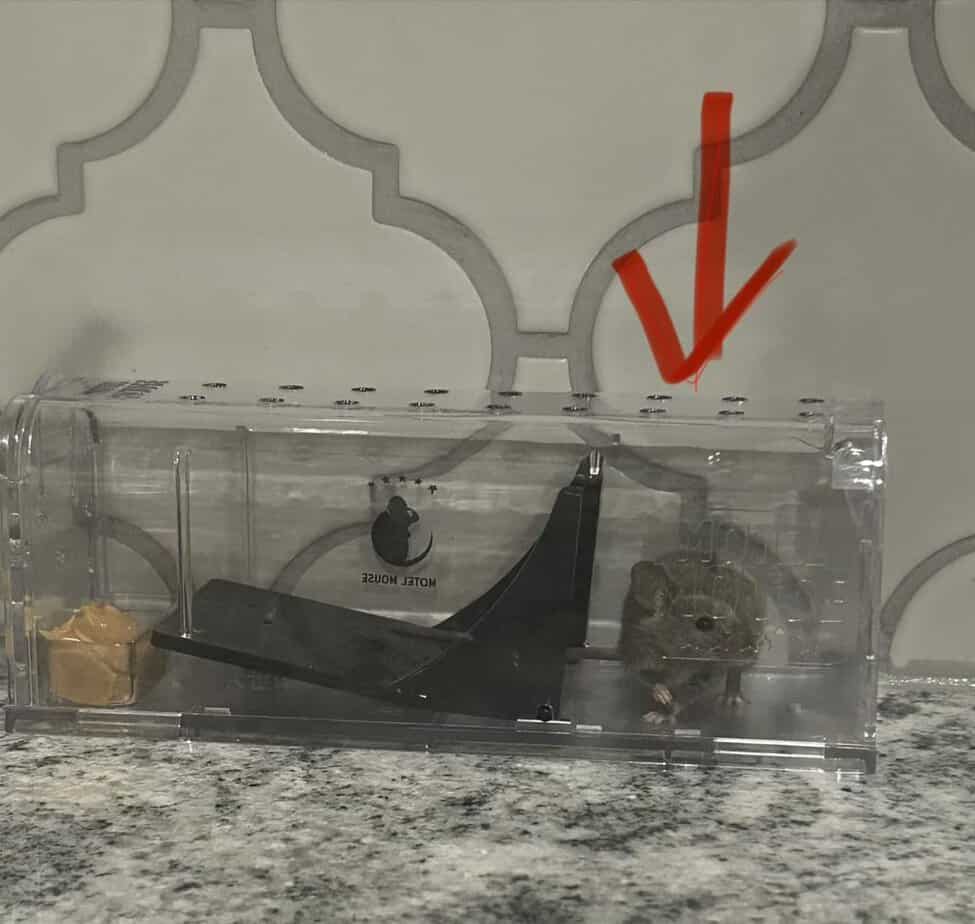
Live traps you check every day (my favorite!)
Hands down, live traps (when I am able to check everyday) have worked best for me. There’s no poison to worry about, no mess in your camper, and you know the problem is solved when the traps stay empty.
Once you catch one, release it well away from your camper and campsite, or it may find its way right back in. We like to walk a half mile or so away and it always ends up being a fun quick family walk!
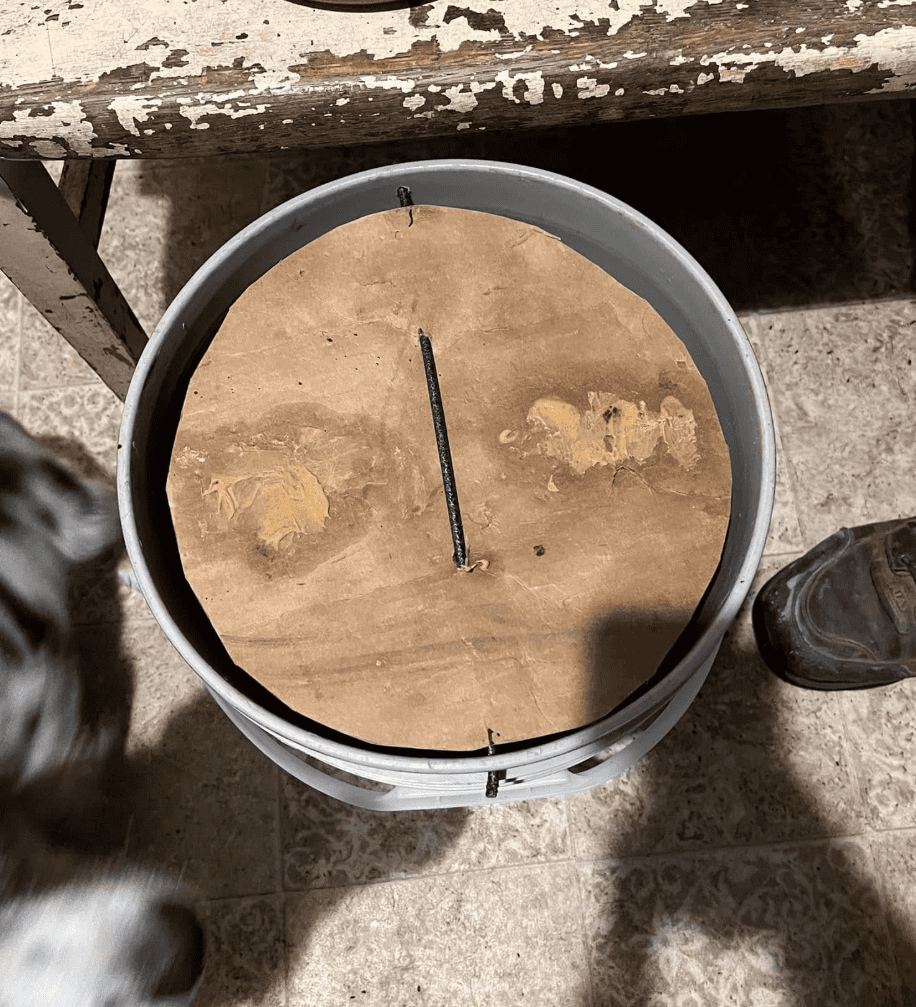
The 5-gallon bucket roller trap (live catch or not – your choice!)
My husband had a TON of success with this one at his mom’s ranch house. It’s a big DIY trap, so it’s better for a house, garage, shed, or the spot where your RV is stored than inside a camper, but it works great.
Here’s how it works: a rod that spins freely with either a can or piece of cardboard on it is set across the top of a 5-gallon bucket, and you put a little bait on it (peanut butter is a popular choice) with a ramp up to the edge. When a mouse walks out for the treat, the rod spins with the weight imbalance and it drops into the bucket!
If you leave the bucket dry, it’s a live catch. Check it daily and release the mouse far away from your home. Add a few inches of water to the bottom and it becomes a kill trap instead.
Clear, enclosed traps (mess-free kill traps)
With that being said, these clear enclosed mouse kill traps are easy to check and ensure no grossness is able to leak out onto your RV floors once a mouse is caught.

Last resort methods (not humane)
These two are listed last on purpose. If you’ve tried the nicer options and nothing has worked, here’s what some people use.
Cornmeal + Baking Soda
This is one I hesitate to mention, as it’s not a very humane way to kill a mouse… but at the same time, if nothing else is working, you can’t let mice ruin your camper or your family’s health!
The plus side is that, unlike poison, the mice will pass due to an inability to pass the massive amount of gas created from ingesting the baking soda. You still may have to find where they died, but atleast you can feel good in knowing that nothing else will die should they find the mouse body first.
The recipe is equal parts baking soda and cornmeal (via Holly D)

Cedar Oil on panty liners
According to Dannie Martel of the North Idaho Rat Rescue, the only thing that she says works no matter what is cedar oil. Now, this method of travel trailer rodent control is listed at the BOTTOM of this list as it’s also not super humane (cedar oil causes respiratory infections in rodents that will kill them in under 4 days!) But, as you know, sometimes there’s not a ton of solutions left once you’ve tried all the “nice ways”.
Cedar Oil can be a mess to deal with (soaking into things it shouldn’t, oil stains, etc) however here’s an awesome trick – soak a pantyliner with some cedar oil and then stick it where you need!

How to clean up after mice safely
Mouse droppings, urine, and nests can carry germs (including hantavirus), so please don’t just grab a broom. Here are the CDC’s steps:
- Open doors and windows for about 30 minutes and leave the RV while it airs out
- Put on rubber or plastic gloves
- Do not sweep or vacuum droppings, urine, or nesting material – it can send particles into the air
- Soak everything with a fresh bleach solution (1.5 cups of bleach per gallon of water) or an EPA-registered disinfectant, and let it sit for 5 minutes
- Wipe it up with paper towels and put them in a trash can with a lid
- Wipe or mop hard surfaces with disinfectant
- Spray dead mice, nests, and used traps with disinfectant, then double-bag them, tie the bags shut, and throw them out
- Wash your gloved hands, remove the gloves, then wash your hands with soap and warm water
Throw away any food or paper goods mice got into. Source: CDC – How to Clean Up After Rodents
Winter storage checklist
Fall is when mice go looking for somewhere warm, so do this before your RV sits for the winter. For more, see my winter RVing tips.
- Empty the food, then deep clean the cabinets, drawers, and counters
- Bring paper goods like toilet paper, paper towels, and tissues inside (or store them in a sealed bin)
- Seal the entry points from Step 1 before the first cold snap
- Put repellents like Fresh Cab and Grandpa Gus cotton balls in enclosed spaces like cabinets, where the scent lasts longer
- Put out contained traps and check on your RV regularly
- Block the tires and jacks with aluminum flashing so mice can’t climb them
More tips on how to keep mice out of your camper
- Use vaseline or aquaophor on any out of sight surfaces they might rub against – they hate getting things on their fur!
- Top anything you can with cayenne pepper as an extra precaution
- Use copper scrubbies with slits to keep cords safe from rodents trying to get in while hooked up
- Use bubble style screens over exhaust ports and referigerator vents to keep bugs/mice out but keep the ariflow
- Some people swear by LED Ropes under the perimiter of the RV
- Soak a bowl of rice with pure peppermint oil to make the smell last longer
- Pay special attention to the tires and jack – some people make a barrier of sorts with aluminum flashing material to prevent mice from climbing the tires and such
- Crawl under your camper at night (with the lights on inside) to have an easier time spotting any tiny holes… just look for where the light shines through
- Dryer sheets seem to rarely work – worth a shot if you have some, but alot of people don’t have much luck with it.

Keeping mice out of your RV: FAQ
Does Irish Spring soap keep mice away?
Not in my experience. The mice chewed right through my bars of soap.
How small of a hole can a mouse fit through?
About the size of a dime, so check around pipes, wires, hoses, and vents.
Do ultrasonic repellers work?
In my experience, most mice cleared out in about a week. Use one per space, because the frequencies can’t pass through walls.
Can mice chew through spray foam?
Sometimes. Reviews are mixed, so stuff holes with copper mesh first and then add a layer of foam.
What is the best way to get rid of mice in an RV?
Seal the entry points, then use live traps that you check daily. That combination has worked best for me.
Do dryer sheets keep mice out?
They rarely work. They’re worth a shot if you already have some, but I wouldn’t count on them.
Is it okay to use poison?
I don’t recommend it. The mouse can die somewhere random and stink, and other animals like owls, foxes, coyotes, and your pets can be poisoned if they eat it.
How often should I check a live trap?
Every day, so the mouse isn’t stuck there without food or water.

- Best Mouse Repellents for RVs & Campers (Our Top Picks) - October 29, 2026
- Camping Mad Libs – 6 Printable Stories Kids Will Love (+Free PDFs!) - March 31, 2026
- Camping Would You Rather Questions + Free Printable (65+ Ideas for Kids, Teens + Adults!) - March 29, 2026


I like mothballs around openings besides covers over heater,etc.
We took loose fur out of the comb from our long haired cat and put that in a few different places and no more mouse issues in the camper😍
Pine-Sol does not freeze very little 5 Drops of water to activate in a Solo cup and put it around your camper in different areas
Gain fabric sheets