Spring is one of the best times to learn about frogs – the eggs are hatching in ponds, tadpoles are wriggling around in the shallows, and if you know where to look you can actually watch the whole life cycle happening right in front of you! As an outdoor family in Wyoming, the frog life cycle is one of our favorite spring nature topics to explore with the kids.
This article walks through all four stages of the frog life cycle for kids in simple language, with a free printable trifold brochure you can download and use at home, in the classroom, or even on a nature walk. Almost everyone charges for printables like this – ours is completely free!
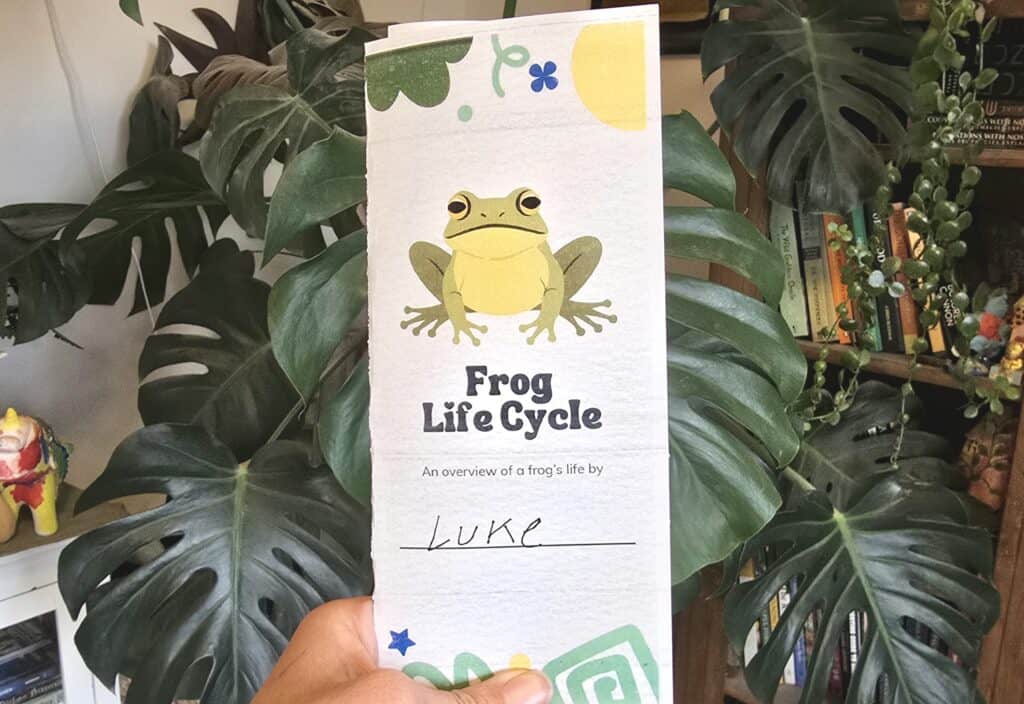
Table of Contents
Watch It First – Frog Life Cycle Video for Kids
When I teach nature topics to my kids, I love pairing a video with a hands-on activity or printable. It gives them a visual first and then the printable helps the information stick. This Dr. Binocs Show video is one of the best frog life cycle explanations I’ve found for kids – it’s animated, fun, about 4 minutes long, and consistently recommended by teachers for ages 6-8!
Watch the video together first, then read through the stages below and use the free printable to review what they learned!
The 4 Stages of the Frog Life Cycle
Frogs are amphibians – which means they can live both in water and on land. What makes frogs extra special is the incredible transformation they go through to get there! This process of change is called metamorphosis, and it happens in four amazing stages.
Stage 1 – The Egg 🥚
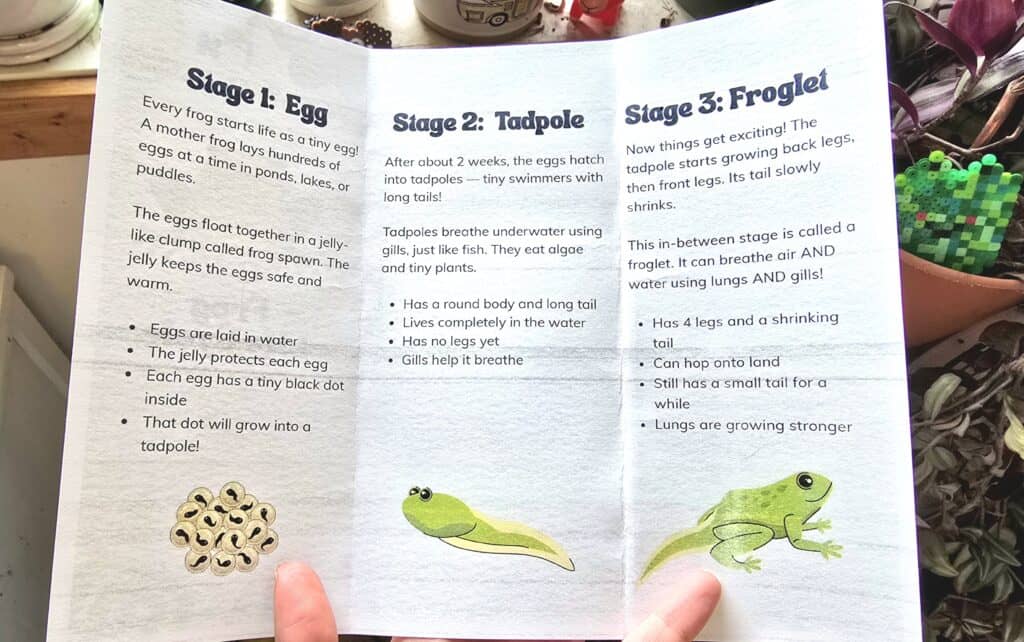
Every frog starts life as a tiny egg. A mother frog lays hundreds of eggs at once – sometimes thousands! – in ponds, lakes, puddles, or slow-moving streams. The eggs float together in a jelly-like clump called frog spawn.
That jelly isn’t just for looks – it protects each egg from predators and keeps the eggs warm. Inside each tiny egg you can spot a small black dot. That dot is the baby frog growing!
Key facts about frog eggs:
- Eggs are laid in water, usually in spring
- The jelly coating protects each egg
- Each egg has a tiny black dot inside that will grow into a tadpole
- One frog can lay up to 4,000 eggs at once!
Stage 2 – The Tadpole 🐟
After about 2 weeks, the eggs hatch into tadpoles! Tadpoles look nothing like frogs at this stage – they have a round body, a long tail, and no legs at all. They swim just like fish!
Tadpoles breathe underwater using gills, just like fish do. They eat algae and tiny water plants to grow bigger and stronger. This stage can last anywhere from 6 to 12 weeks depending on the species and the water temperature.
Key facts about tadpoles:
- Round body and long tail for swimming
- Lives completely in water
- Breathes through gills like a fish
- Eats algae and tiny water plants
- Has no legs yet!
Stage 3 – The Froglet 🐸
Now things get really exciting! The tadpole starts growing back legs first, then front legs. As the legs grow, the tail slowly starts to shrink. This in-between stage is called a froglet.
Something amazing happens at this stage – the froglet can breathe air AND water using both lungs AND gills! It starts to hop onto land for the first time but still spends a lot of time near the water.
Here’s one of the most incredible frog facts: the froglet actually absorbs its own tail! Its body uses the tail as an energy source – basically eating it from the inside. No waste at all!
Key facts about froglets:
- Has 4 legs and a shrinking tail
- Can hop onto land for the first time
- Breathes with both gills and developing lungs
- Body absorbs the tail as food energy
Stage 4 – The Adult Frog 🐸
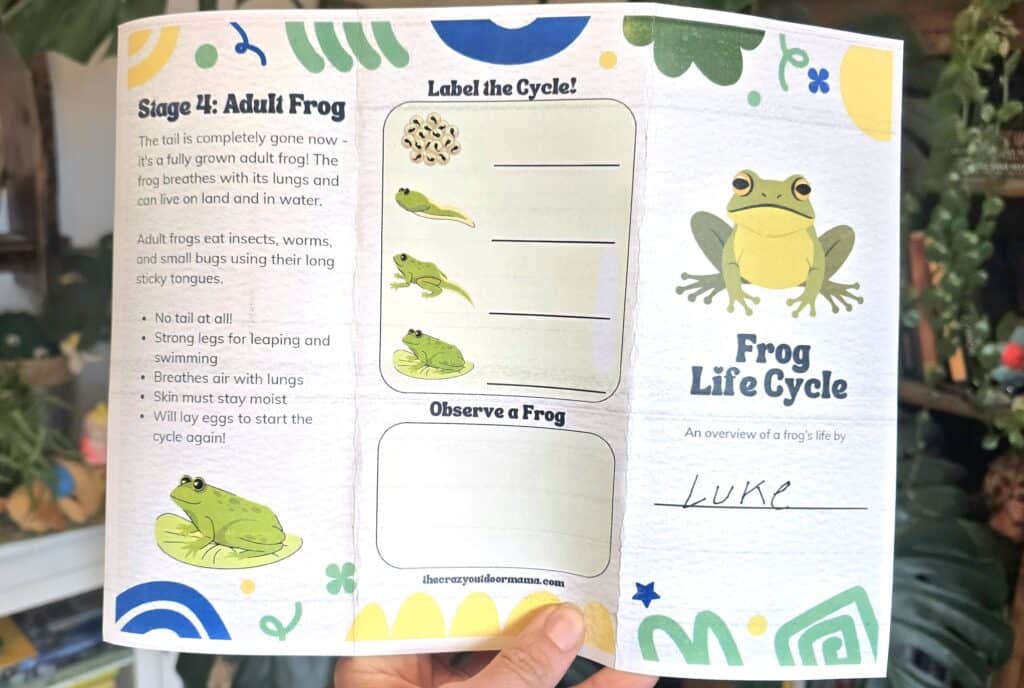
The tail is completely gone – it’s a fully grown adult frog! The adult frog breathes entirely with its lungs and can live on both land and in water. Those powerful back legs are built for leaping, swimming, and escaping predators.
Adult frogs eat insects, worms, and small bugs using their incredibly fast sticky tongues. They catch prey faster than the human eye can see!
Once the frog is fully grown, it will find a mate and lay eggs – and the whole amazing cycle starts all over again!
Key facts about adult frogs:
- No tail at all!
- Strong legs for leaping and swimming
- Breathes air with lungs
- Skin must stay moist at all times
- Eats insects using a long sticky tongue
- Lays eggs to start the cycle again!
Fun Frog Facts for Kids
After learning all four stages kids always want to know more! Here are some of the most surprising frog facts to share:
- 🐸 Frogs drink water through their skin – they never actually swallow water the way we do!
- 🐸 There are over 7,000 species of frogs in the world
- 🐸 Some frogs can jump 20 times their own body length
- 🐸 The tiniest frog in the world is smaller than a fingernail
- 🐸 Brightly colored frogs are often poisonous – the colors are a warning to predators!
- 🐸 Frogs are cold-blooded, meaning their body temperature changes with the environment
- 🐸 Spring is when you’re most likely to see frog spawn because that’s when frogs return to ponds to breed
Free Printable Frog Life Cycle Brochure
Most frog life cycle printables cost money – this one is completely free! This trifold brochure covers all four stages with kid-friendly explanations, fun facts, real illustrations, a label-the-cycle activity, and a quick quiz. It’s designed for ages 6-8 and works great for:
- Home learning and homeschool science units
- Nature walks and outdoor learning
- Spring classroom activities
- Pairing with the Dr. Binocs video above
- After-school nature clubs
Download the Free Frog Life Cycle Printable Here!
To print: Open the PDF, set your printer to landscape orientation on 8.5×11 paper, and print double-sided. Fold into thirds and you have a brochure! Cardstock prints especially nicely but regular paper works great too.
How to Find Frogs in Spring
The absolute best way to bring the frog life cycle to life is to actually find it happening in nature! Spring is the perfect time because frogs return to ponds to breed as soon as the weather warms up. Here’s where to look:
- Ponds and lakes – look along the shallow edges for clusters of frog spawn floating near plant stems or submerged branches
- Slow-moving streams – still water areas along the banks are prime egg-laying spots
- Puddles and marshy areas – some frog species use temporary water sources
- Under logs and rocks near water – adult frogs rest in cool, moist spots during the day
Once you spot frog spawn, check back every few days if you can – you might catch tadpoles hatching! Bring a magnifying glass and the printable brochure and turn it into a full outdoor science lesson right at the pond’s edge.
If your kids loved learning about the frog life cycle, don’t miss the butterfly life cycle for kids – another free printable brochure covering all four stages of metamorphosis!Extension Activities to Go With the Printable
Once kids have watched the video and worked through the brochure, here are some fun ways to keep exploring:
Playdough Frog Life Cycle
Give kids playdough in different colors and challenge them to sculpt all four stages of the frog life cycle. This is a wonderful hands-on way to reinforce the stages – making a round egg, then a tadpole with a tail, then a froglet with tiny legs, then a full frog with no tail makes the transformation really click. Display them in a row or arrange in a circle to show the cycle!
Frog Jump Measuring Activity
Frogs can jump 20 times their body length – bring this fact to life with a measuring activity! Have kids measure their own body height, multiply by 20, and mark that distance on the ground with chalk or tape. Then try to jump that distance themselves. Spoiler: they won’t make it – which makes for a great conversation about how impressive frogs really are!
Spring Nature Walk Scavenger Hunt
Take the learning outside with a free printable spring scavenger hunt – add “frog spawn” or “tadpoles” to the list if you’re near water! Pair it with the frog brochure for a complete spring nature learning experience.
Build a Frog Habitat
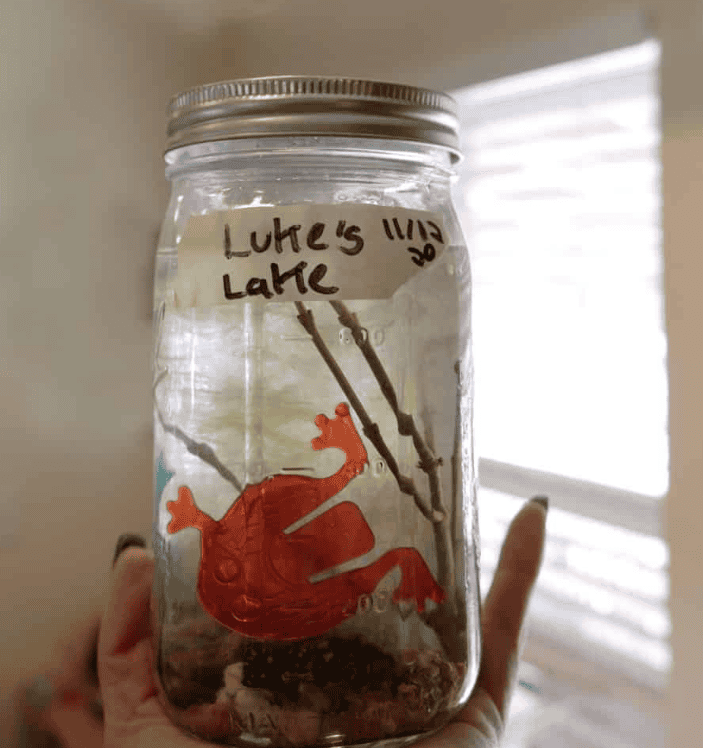
Use a plastic storage bin, some water, rocks, and plants to create a mini frog habitat model. Kids can place toy frogs at different life cycle stages and retell the story of the frog’s journey from egg to adult. Great for younger kids who learn through play!
Act Out the Life Cycle
This one is pure fun – have kids act out each stage! Curl up tight like an egg, wriggle on the floor like a tadpole, crawl with legs dragging a tail like a froglet, then leap around like an adult frog. PBS Kids has a great frog life cycle act-it-out activity guide that pairs perfectly with this!
Frog Life Cycle Books to Read Alongside
If you want to go deeper, these books are wonderful companions to the printable and video:
- National Geographic Readers: Frogs – perfect for ages 6-8, lots of real photos and easy-to-read facts
- Frogs by Gail Gibbons – a classic nature book with beautiful illustrations that answers tons of common frog questions
- Tadpole to Frog (National Geographic Kids) – a level 1 reader kids can tackle independently after reading the brochure
Frequently Asked Questions
What are the 4 stages of the frog life cycle?
The four stages of the frog life cycle are egg, tadpole, froglet, and adult frog. The process of changing from one stage to the next is called metamorphosis. It starts when a female frog lays eggs in water in spring, and ends with a fully grown adult frog that will eventually return to the water to lay its own eggs and start the cycle again.
How long does the frog life cycle take?
The full frog life cycle from egg to adult frog takes roughly 12-16 weeks depending on the species and water temperature. Eggs hatch into tadpoles after about 2 weeks, tadpoles grow legs and become froglets over 6-12 weeks, and then the froglet’s tail disappears over the following few weeks as it becomes a fully formed adult frog.
When is the best time to see frog eggs in nature?
Early spring is the best time to find frog spawn in nature – typically March through April in most of North America, when the weather is warming up but still cool. Look in shallow edges of ponds, lakes, and slow streams for jelly-like clumps floating near plant stems. Check back every few days and you might catch the tadpoles hatching!
What is metamorphosis?
Metamorphosis is the process of dramatic physical change that some animals go through as they grow up. Frogs go through metamorphosis as they transform from water-breathing tadpoles into air-breathing adult frogs. Butterflies and moths also go through metamorphosis – changing from caterpillars into adult butterflies through a similar transformation process!
I hope this becomes a favorite spring learning activity for your family! The combination of the Dr. Binocs video, this article, and the free printable brochure gives kids multiple ways to take in the same information – which is exactly how nature learning sticks best.
If you go frog hunting this spring and spot some spawn or tadpoles, I’d love to hear about it in the comments below!
More spring nature activities your kids will love:
- Free Printable Spring Scavenger Hunt for Kids
- Build a Nest Activity for Kids (+ Free Scavenger Hunt Printable)
- Worm Activities for Kids
- 15 Fun Dandelion Crafts for Kids
- Outdoor Rainy Day Activities for Kids
- 50 Spring Activities for Kids

Hi! I love the frog life cycle brochure you created. Unfortunately, when I click on the hyperlink, it takes me to a static page of the front cover, no brochure. I hope you can fix this, because I bet a lot of teachers would enjoy using it. Thanks!
Hi Erica! I emailed you the link to the pdf and updated the article too. I’m sorry for the late response!