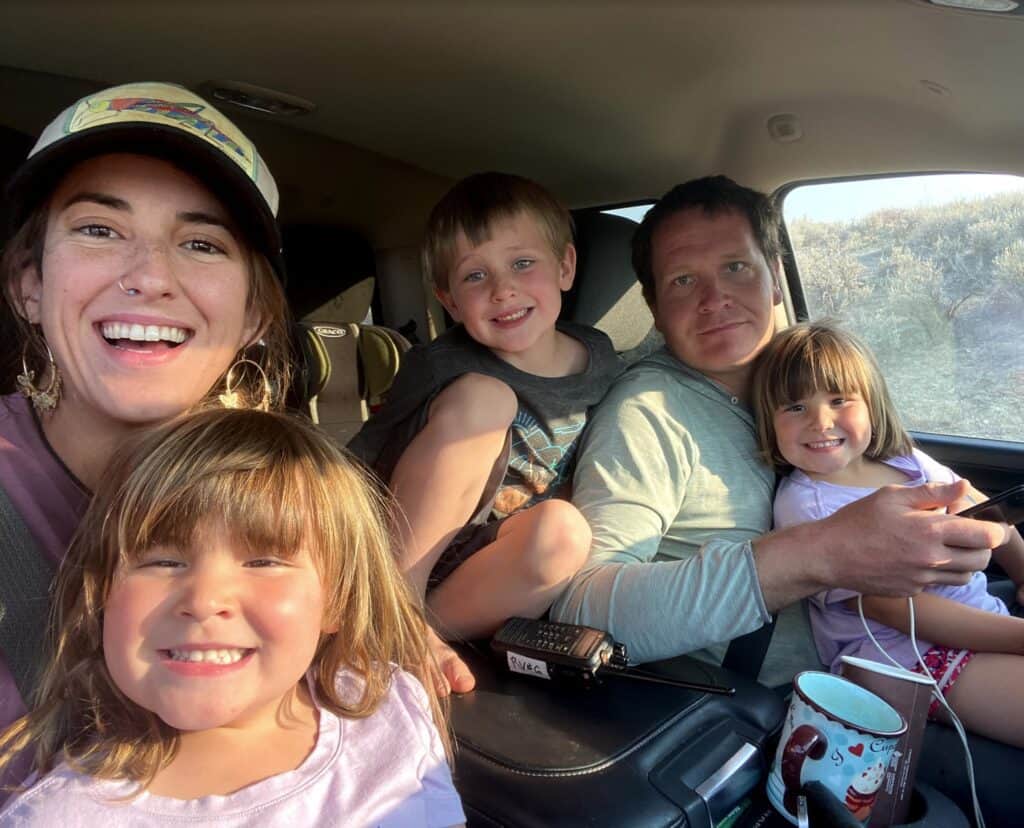
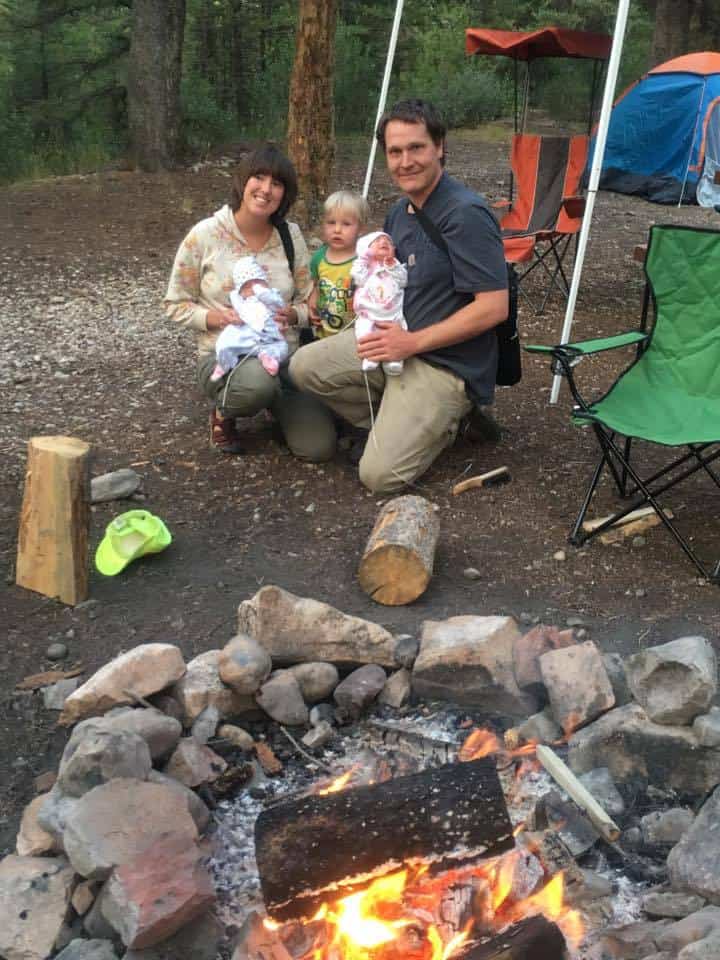
I’ll be honest – we almost didn’t take our twin girls camping when they were newborns. They had been on supplemental oxygen, and I was terrified of doing anything outside our carefully controlled routine at home.
But we did it anyway. And camping with our newborn twins turned out to be one of the most freeing experiences of that whole first year. Being outside, away from all the noise and stress of “doing new parenthood right,” felt like breathing again.
If you’re an outdoor family wondering whether camping with a newborn is actually possible – it is. A newborn’s needs are genuinely pretty basic: fed, warm, held, and sleeping. That’s very doable at a campground. The hard part is mostly in your head. Here’s everything I learned across three kids to help you pull it off.
Related: Free newborn camping packing list (9 pages!) – and our full guide to camping with babies and toddlers
Table of Contents
Is my newborn old enough to go camping?
There’s no magic age, but most pediatricians will clear you to camp once your baby has had their first round of vaccines (around 2 months) and is gaining weight well. That said, plenty of families go earlier – I know parents who camped at 3 weeks old, and we went pretty early with our twins. The key is checking with your own pediatrician, choosing a low-risk setup (more on that below), and being completely okay with packing up and going home if it’s not working.
15 Tips for Camping with a Newborn
1. Start close to home – make it a trial run
Your first camping trip with a newborn should be somewhere you can easily drive home from if things go sideways. This takes so much pressure off. You’re not committed to making it work – you’re just testing what works. You’ll learn so much on that first trip: maybe your baby actually does better in a pack n play than a baby tent, or you forgot something that matters. Go home knowing that, and your second trip will be dramatically easier.
Also plan for the drive to take about twice as long as normal. You’ll be stopping to feed, change, and soothe – that’s just baby travel time. Don’t forget to grab our free camping baby packing list before you go – it’s 9 pages and covers way more than you’d think to pack!
2. Choose a developed campground with water and electric hookups
This is not the trip for primitive camping. A developed campground with bathroom access, running water, and ideally electric hookups makes newborn care so much easier. You can keep a bottle warmer plugged in, you don’t have to haul water for washing, and having a real bathroom nearby for middle-of-the-night diaper changes is something you’ll be deeply grateful for. Look for sites with paved or flat paths too – walking a fussy baby in a carrier is one of your best tools and you’ll want easy ground to do it on.
3. Bring a pop-up baby tent for naps and sun + bug protection
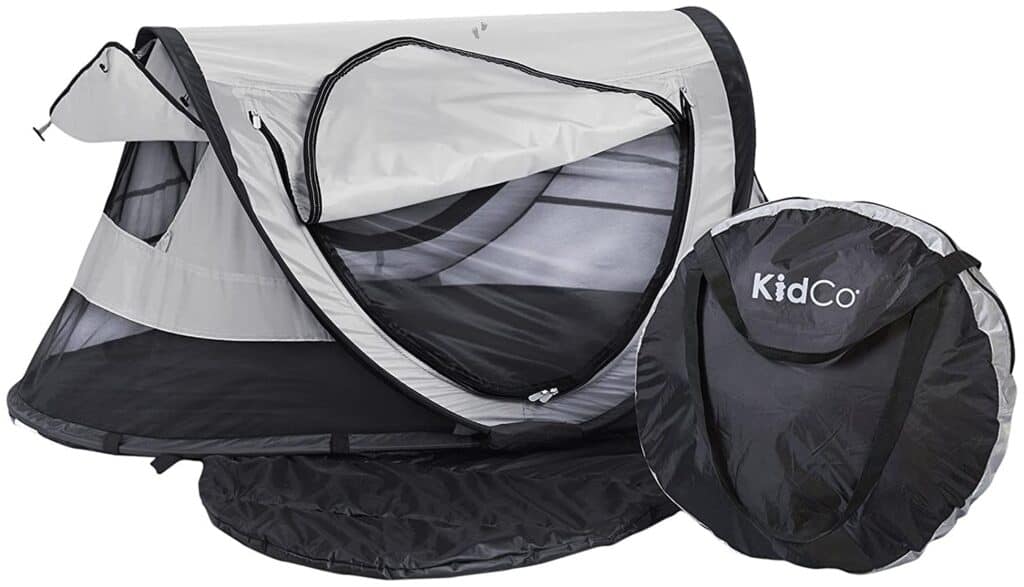
Under 6 months you can’t use sunscreen or bug spray on baby’s skin, so shade and physical coverage is everything. A pop-up baby tent is one of the most useful pieces of gear you can bring camping with a newborn – it keeps bugs off, provides shade for daytime naps, and gives baby a safe contained spot while you’re doing camp tasks.
We really loved the KidCo Peapod – it has a really durable frame, keeps its form, and compacts down really small. (I did buy the Kilofly too, and while it looks great in photos, it actually warped badly in real life – skip it.) Tip: put a changing pad inside the baby tent – the raised edges make it extra cozy and help baby feel secure for naps.
If you want to save some money, this mosquito net cover for your pack n play is a great budget alternative!
4. Bring a carrier your newborn already loves – and test it at home first
Don’t save the carrier for the campground. Get it adjusted at home, make sure your baby is comfortable in it, and ideally take it on a short walk before your trip. Trying to figure out carrier adjustments while managing a crying baby and a campsite at the same time is not a fun experience.
For newborns, a front carrier is your best bet up until about 3 months when they have enough head control for a backpack carrier. We used the Ergo for our son (it has a newborn insert) and the Twingo for our twins. Not only does babywearing make camp life easier, it lets you explore so many more places than a stroller ever would.
Check out all the must-have baby camping gear we’ve used with our kids!
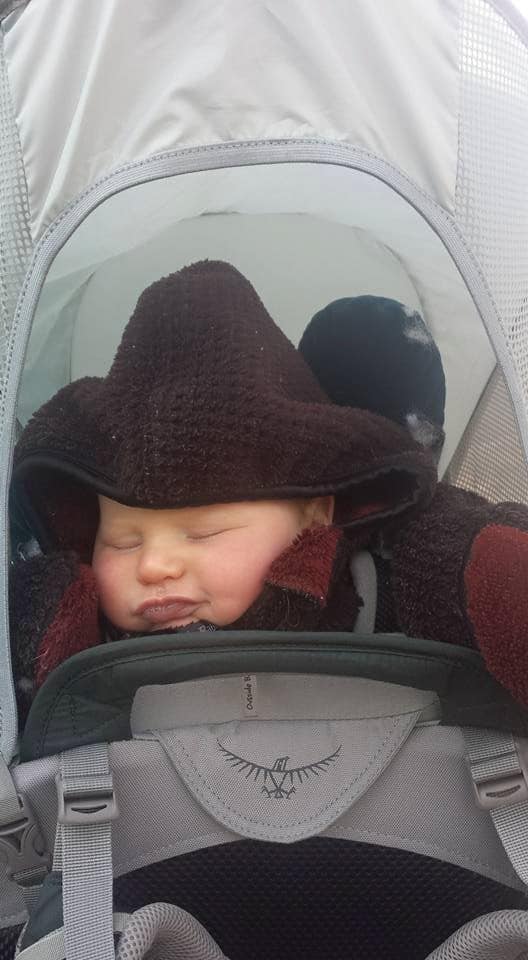
5. Pre-warm bottle water in a thermos so nighttime feeds are easy
If you’re formula feeding or using pumped milk and don’t have electric hookups, this trick is a game-changer: heat up water before bed and store it in a thermos. When baby wakes up hungry at 2am, all you have to do is pour and mix – no fumbling with a camp stove half asleep. For warming pumped breast milk, the same trick works – pour thermos water into a small bowl and set the bag or bottle inside for a few minutes.
Read more on managing baby bottles while camping here.
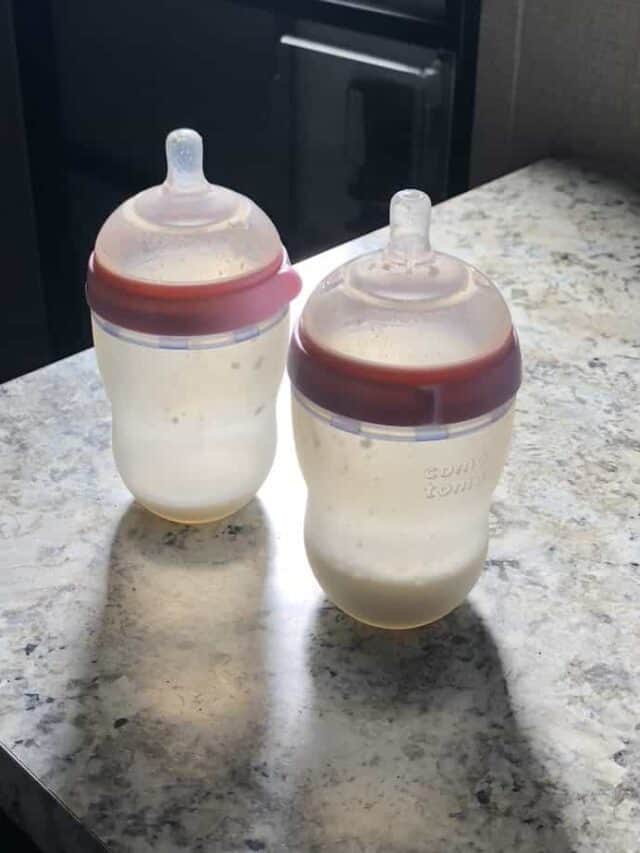
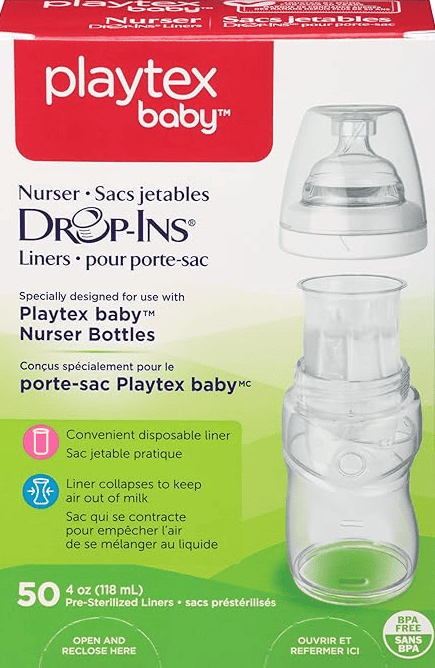
6. Use disposable bottles to skip the sterilizing hassle
Newborns have less-developed immune systems, so bottle cleanliness matters more than it will in a few months. If washing and sterilizing bottles at a campsite is stressing you out, pre-sterilized disposable bottles are a completely valid solution – especially for that first trip when you’re already managing a lot. They’re recyclable too.
7. If you’re breastfeeding, think through your nighttime nursing setup
Breastfeeding while camping is actually really convenient – food is always ready, nothing needs to be warmed up, and I was even able to nurse in my front carrier while hiking by loosening one side. The middle-of-the-night logistics are worth thinking through though.
I slept with my upper body (dressed extra warm) outside the sleeping bag so I had easy access without wrestling with blankets while half asleep. If you’re co-sleeping, make sure you’re alert enough to nurse safely – the camping setting can make it tempting to nod off mid-feed. Read more about breastfeeding and pumping while camping here.
8. Layer smartly – but don’t over-bundle
New parents tend to over-bundle newborns, but overheating is actually a bigger risk than being a little cool. Keep it simple with three layers: a long-sleeve onesie, a fleece footie pajama, and a warm swaddle or baby camping sleeping bag on top. Add a hat and mittens depending on temps – they’re small and easy to pack just in case. Fleece booties are great for extra foot warmth during daytime too.
Read our full guide on how to keep your baby warm at night while camping.
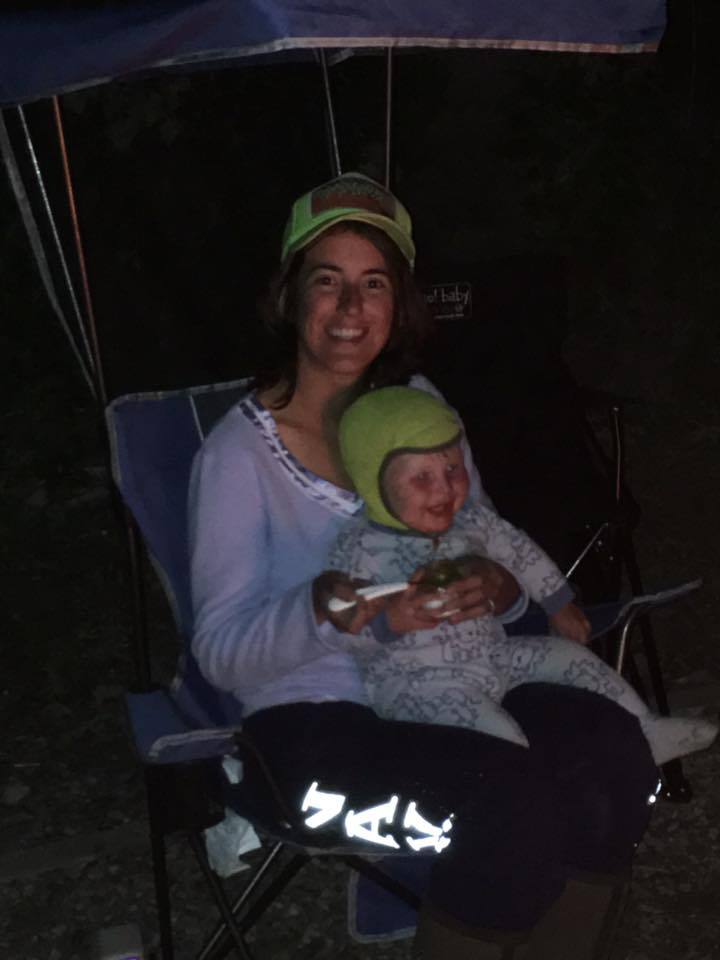
9. Replicate your home sleep routine as closely as possible
Whatever you do at home to wind baby down – white noise machine, a specific swaddle, reading before bed – bring it to camp. Familiar sleep cues help newborns settle even in totally unfamiliar places. A white noise machine is especially worth its weight camping because it muffles sudden campground sounds (dishes clanking, neighboring campers, zippers) that can startle a baby awake right when they’ve finally settled – and it also lets you move around camp after bedtime without tiptoeing!
10. If you co-sleep, follow safe sleep guidelines even more carefully than at home
Co-sleeping at camp is really practical – especially if you’re breastfeeding – but the camping environment adds some extra risks. Thick sleeping bags and heavy camping blankets can get pulled over baby more easily than home bedding. Skip the campfire drinks if you’re planning to co-sleep. Follow the same guidelines you use at home, and dress both of you extra warm so you’re not relying on heavy blankets to stay comfortable.
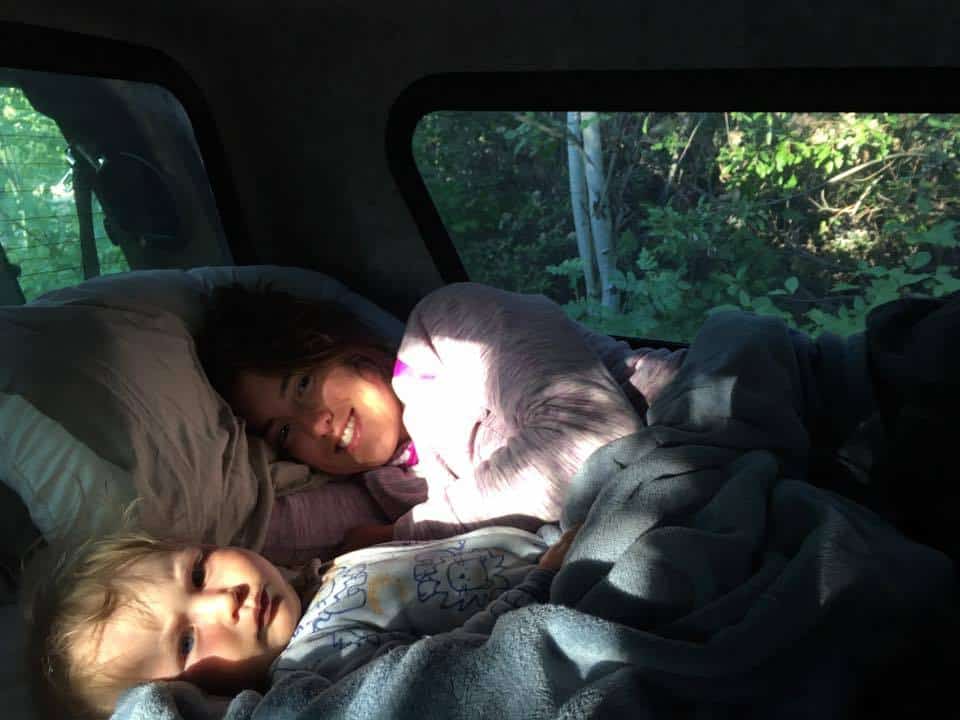
11. Use a pack n play with a blackout cover for camp sleep
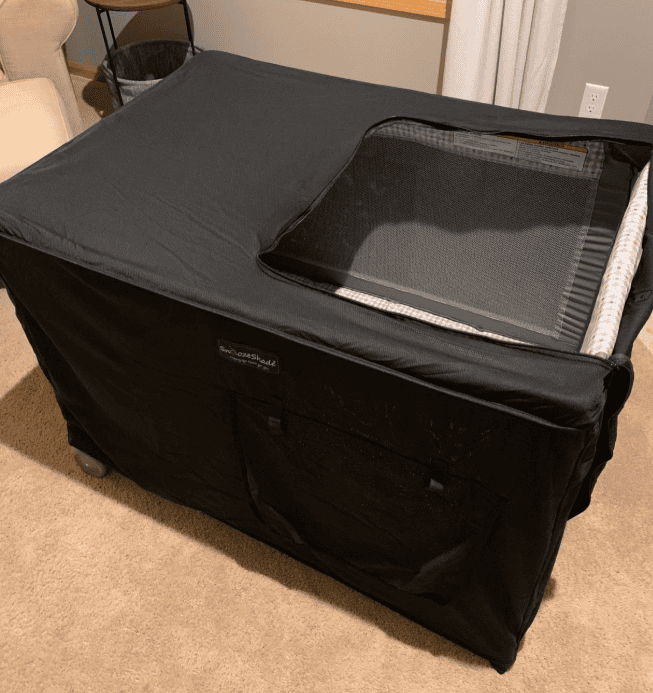
If your baby sleeps in a pack n play at home, bring it – familiar sleep surfaces make a real difference. The one camping-specific challenge is light: tent walls let in a lot of morning light and tents warm up fast, which can mean early wakings. A blackout cover solves both problems and you can also insulate underneath the pack n play with blankets or foam padding to keep the sleep surface warmer on cold nights.
12. Don’t stress overnight diaper changes – most babies are fine in one diaper
We used cloth with our son and disposables with our twins, and all three were totally fine in one diaper overnight. This is especially useful when you think about how many layers your baby is dressed in at camp – getting through all of those for an unnecessary change is like defusing a bomb at 3am! Obviously check if you smell something or notice real discomfort, but don’t feel like you have to do a middle-of-the-night change routine just because you’re camping.
13. Bring a battery-powered baby monitor so you can enjoy campfire time
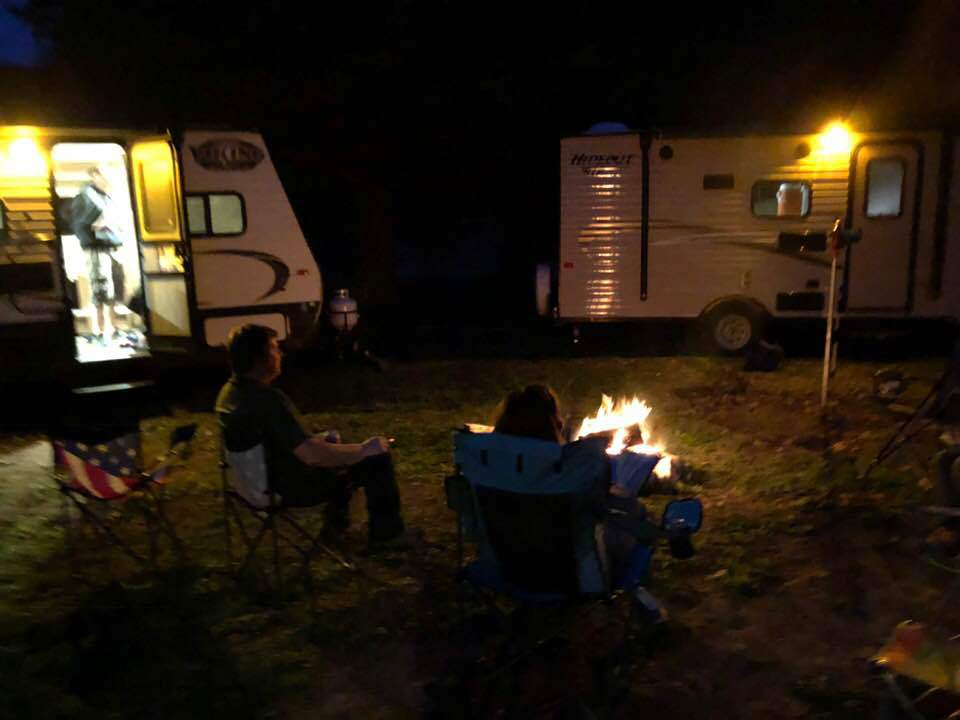
A battery-powered baby monitor might be the single best thing you can bring camping with a newborn. You don’t have to go to bed at 7pm, and you don’t have to sit in the tent listening for every sound. Once baby is down, you can actually sit around the campfire and be a human person again – which matters a LOT when you’re in the newborn trenches.
In a pinch, if you have cell signal you can put one phone on speaker near the baby and use the other to listen – just make sure to mute it so notifications don’t blast!
14. Bring a mat or large blanket for baby to lay on during the day
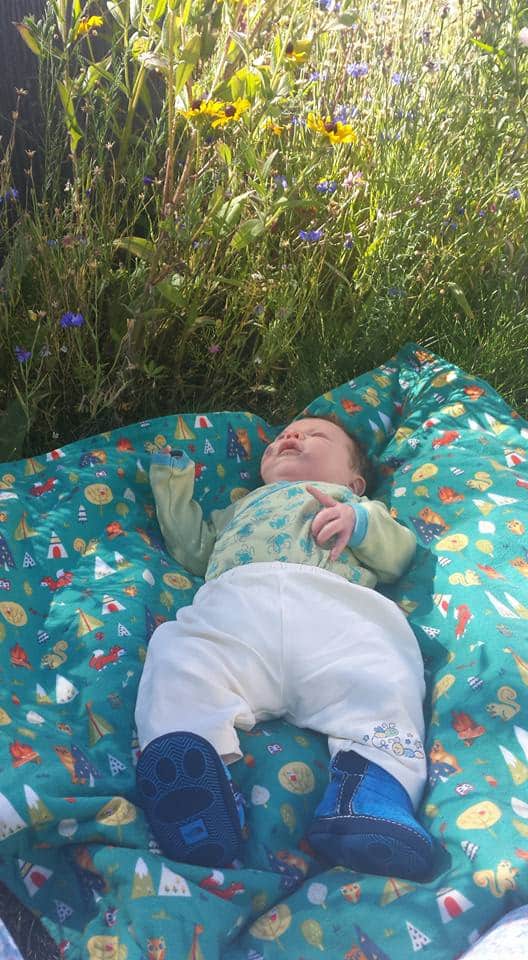
A simple play mat or large beach towel gives baby a safe, soft spot outside of the pack n play during the day. It also reduces the rock and stick eating situation! It’s nice because it keeps them next to you where they can look around at all the new sights – which newborns actually love, even if they can’t do much about it yet.
15. Remember – newborns are actually one of the easier ages to camp with
Here’s the thing nobody tells you: camping with a newborn was honestly the easiest phase for us. They don’t run away. They don’t have opinions about which trail you take. They can’t climb things or disappear into the woods. We just put our son in a carrier and he was content for hours. Food and warmth is genuinely all they need – and while the extra baby camping gear makes things more comfortable, don’t let a gear list stop you from going.
One last thing before you go
We took our twin girls camping while they were still on supplemental oxygen. If we could make that work, you can absolutely make it work with your healthy newborn. The hardest part is just deciding to go. Once you’re there, the fresh air and the change of scenery has a way of resetting everyone – including the baby.
You’ve got this. Now grab that free packing list and start planning!
More camping with baby resources:
- 53 best tips for camping with toddlers and babies
- How cold is too cold to camp with a baby?
- How to get your baby to sleep while camping
- Must-have baby camping gear
- How to breastfeed and pump while camping
- 5 hacks for baby bottles while camping