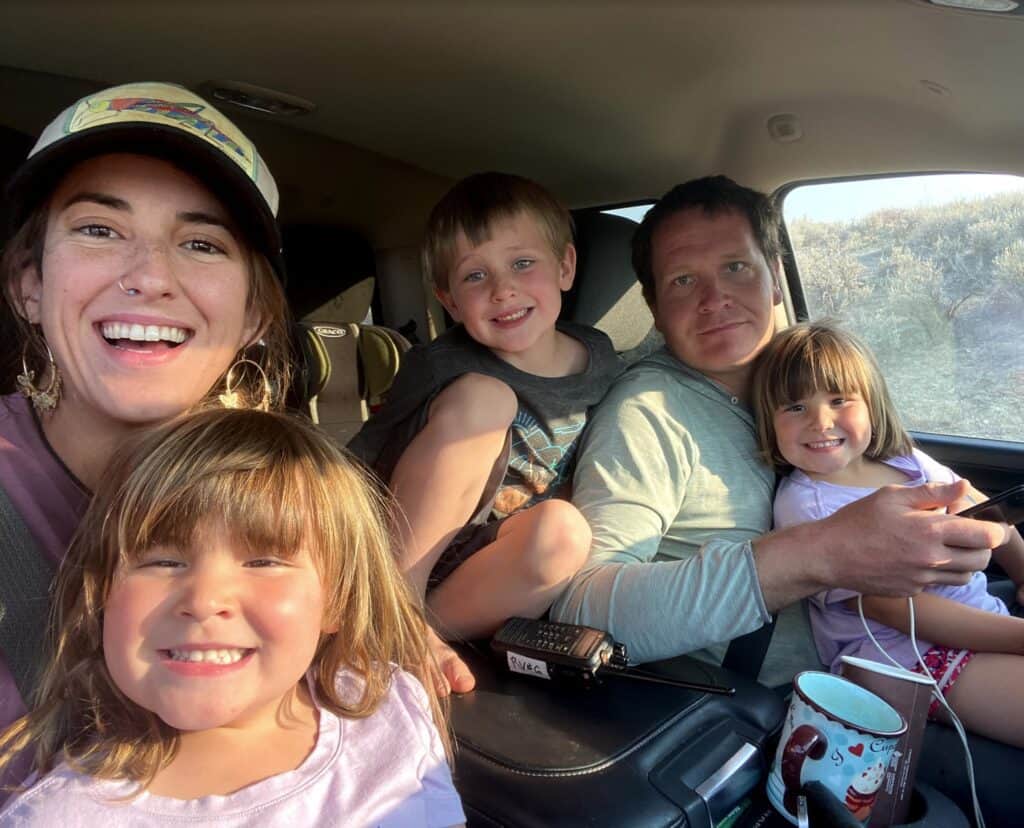
One of the most common questions I hear from new outdoor parents is some version of “but how cold is TOO cold?” – and I get it. When I first started camping with my babies here in Wyoming, I was terrified of getting it wrong.
The honest answer? With the right gear and layering system, babies can camp in surprisingly cold temperatures. I’ve camped with all three of my kids since they were newborns, including in below-freezing temps, and the key is really just knowing what to dress them in and how to set up their sleep space safely.
This guide covers everything – a temperature guide by degree range, the layering system that actually works, the specific gear I recommend, and how to tell if your baby is too cold or too warm at night.
*This post contains affiliate links – I earn a small commission if you purchase through my links at no extra cost to you.*
Table of Contents
How Cold Is Too Cold to Camp With a Baby?
The short answer: most healthy babies can camp comfortably down to around 20-30°F with proper layering and a quality baby sleeping bag. The same rule that applies to adults applies to babies – if YOU can stay warm and comfortable with the right gear, so can they.
The main difference is that babies can’t tell you they’re cold, can’t add a layer themselves, and have specific sleep safety requirements that limit how many blankets you can safely pile on. That’s why having the right gear from the start matters so much more for babies than for adults.
Here’s a temperature guide by range to help you plan:
| Nighttime Temp | What Baby Needs | Notes |
|---|---|---|
| 60°F+ | Light merino onesie + baby sleeping bag | Easy! Most people’s first camping trip range |
| 50-60°F | Merino base layer + light fleece + baby sleeping bag | Add a hat for sleep |
| 40-50°F | Merino base layer + fleece mid layer + warm sleeping bag + hat | Check on baby more frequently |
| 30-40°F | Merino base layer + fleece + insulated outer layer + rated sleeping bag + hat + mittens | Make sure sleeping bag is rated for temps |
| 20-30°F | Full layering system + sleeping bag rated to 20° + hat + mittens + ground insulation | Experienced cold weather campers only |
| Below 20°F | Not recommended for most families | Skip it or use an RV with heat |
Related – if you’re tent camping with a newborn specifically, check out my newborn baby camping tips – yes, it really is possible!
The Baby Camping Layering System
The same three-layer system that works for adults works for babies – you just need to use baby-safe versions of each layer. Here’s how it breaks down:
Layer 1 – Base Layer (closest to skin)
This is the most important layer and the one most parents skip. Your base layer needs to be moisture wicking – meaning it pulls any sweat or dampness away from baby’s skin so they don’t get chilled. The absolute best material for this is merino wool. It’s soft enough for sensitive baby skin, naturally regulates temperature, and stays warm even if it gets slightly damp.
Never use cotton as a base layer. Cotton holds moisture against the skin and will make a cold baby even colder. This is the number one layering mistake people make.
Layer 2 – Mid Layer (insulation)
Fleece is the best mid layer for babies – it’s warm, lightweight, compresses well for packing, and dries fast. As temperatures drop, you can add a second mid layer. The mid layer is also the first one to remove if you’re worried about baby overheating.
Layer 3 – Baby Sleeping Bag (outer insulation for sleep)
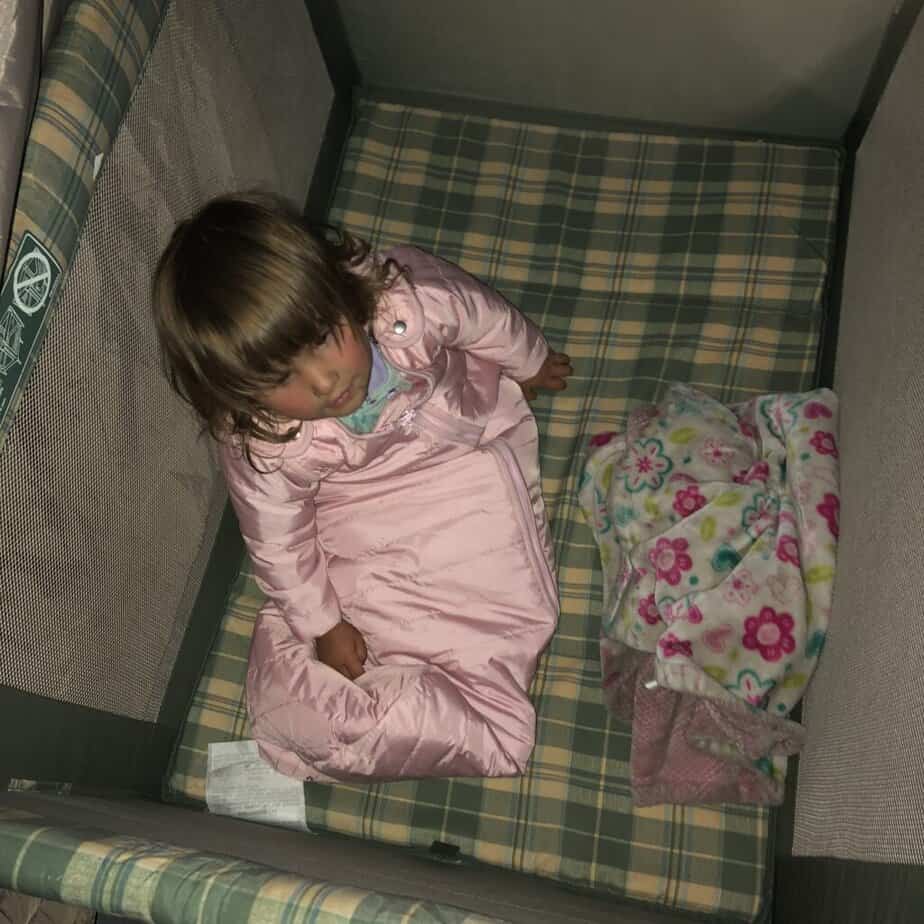
This replaces the blankets you can’t safely use with babies. A properly rated baby camping sleeping bag is the single most important piece of gear you can invest in for cold weather camping with a baby. Make sure the bag’s temperature rating matches or exceeds the coldest temperature you expect to encounter.
The Best Gear to Keep Baby Warm While Camping
🏆 Baby Camping Sleeping Bag – Morrison Outdoors Little Mo 20°
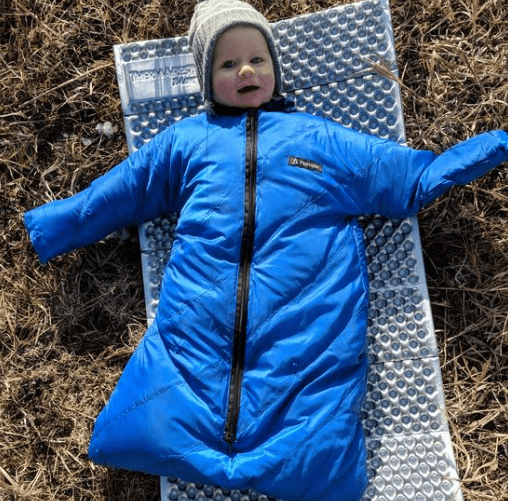
If there’s one piece of gear I recommend above everything else on this list, it’s the Morrison Outdoors Little Mo sleeping bag. This is consistently the most recommended baby camping sleeping bag by outdoor parents, and for good reason – it’s rated to 20°F, uses real 650-fill down insulation, and is designed specifically so babies can’t wriggle out of it at night.
It fits babies from 6 months through toddler age (up to about age 4-5 depending on size), which means you get years of use out of it. The wearable design allows leg movement for rolling over without kicking it off – something regular sleeping bags can’t do for babies.
- Rated to 20°F – handles most camping scenarios
- Real 650-fill down insulation – warm and compressible
- Wearable design – baby can’t kick it off
- Fits 6 months to ~age 5
- Machine washable
→ Check the Morrison Outdoors Little Mo 20° Sleeping Bag
For a full breakdown of baby camping sleeping bag options at different price points and temperature ratings, check out my complete guide to the best baby sleeping bags for camping.
Merino Wool Base Layer Onesie
A merino wool footed onesie is your most important clothing item for cold weather camping with a baby. The footies mean all that body heat stays in the system instead of escaping through bare feet, which makes a big difference on cold nights. Woolino is my go-to brand – the quality is excellent and it holds up through many washes.
Look for one with a full-length zipper for easy middle-of-the-night diaper changes – trust me on this one!
→ Shop Woolino Merino Wool Baby Onesies on Amazon
Wool Baby Hat/Bonnet
Babies lose a significant amount of body heat through their heads, especially since most don’t have much hair yet. A wool or wool-blend bonnet that covers the ears and has a chin strap to keep it on is ideal for camping – it stays put through the night much better than a regular beanie. Look for one that covers the ears fully.
Baby Wool Mittens
Little hands get cold fast and babies can’t tuck them in like we can. Look for mittens with a string that threads through the sleeves of their outfit – this is a game changer because mittens that aren’t attached to anything disappear instantly in a tent. Wool or wool-blend mittens that allow a little airflow are better than fully waterproof ones for sleeping.
Wool Baby Socks
If your base layer onesie doesn’t have footies, wool socks are essential. Baby alpaca wool is especially worth looking for – it’s much softer than regular wool and hypoallergenic, which matters for sensitive baby skin. Even if your onesie has footies, an extra pair of socks worn underneath adds meaningful warmth on cold nights.
Sleeping Pad or Ground Insulation
This one gets overlooked but is critically important – cold comes up from the ground as much as it comes from the air. Even the warmest sleeping bag won’t compensate for a baby sleeping directly on cold ground with no insulation underneath. Make sure baby has a sleeping pad, foam mat, or insulated layer between them and the tent floor. A foam puzzle mat under their sleep area works well and doesn’t add much weight or bulk.
How to Tell if Your Baby is Too Cold (or Too Warm) While Camping
This is one of the most important things to know and most articles don’t cover it. Since babies can’t tell you how they feel, you need to check on them – here’s what to look for:
Signs baby is too cold:
- Cold chest or back (the torso is your best indicator – extremities are often cool even when baby is warm enough)
- Cold ears or face
- Fussing or crying more than usual
- Skin that looks pale or slightly bluish
- Unusual lethargy or difficulty waking
Signs baby is too warm:
- Sweaty neck or damp hair
- Flushed or red cheeks
- Warm or hot chest
- Restless sleep or more waking than usual
💡 The best way to check: place your hand on baby’s chest or the back of their neck. This gives you a much more accurate reading than touching their hands or feet, which are often cool regardless of their overall temperature.
Overheating is actually just as concerning as being too cold – don’t go overboard with layers. The layering system above gives you a good starting point and you can adjust from there based on how baby actually feels.
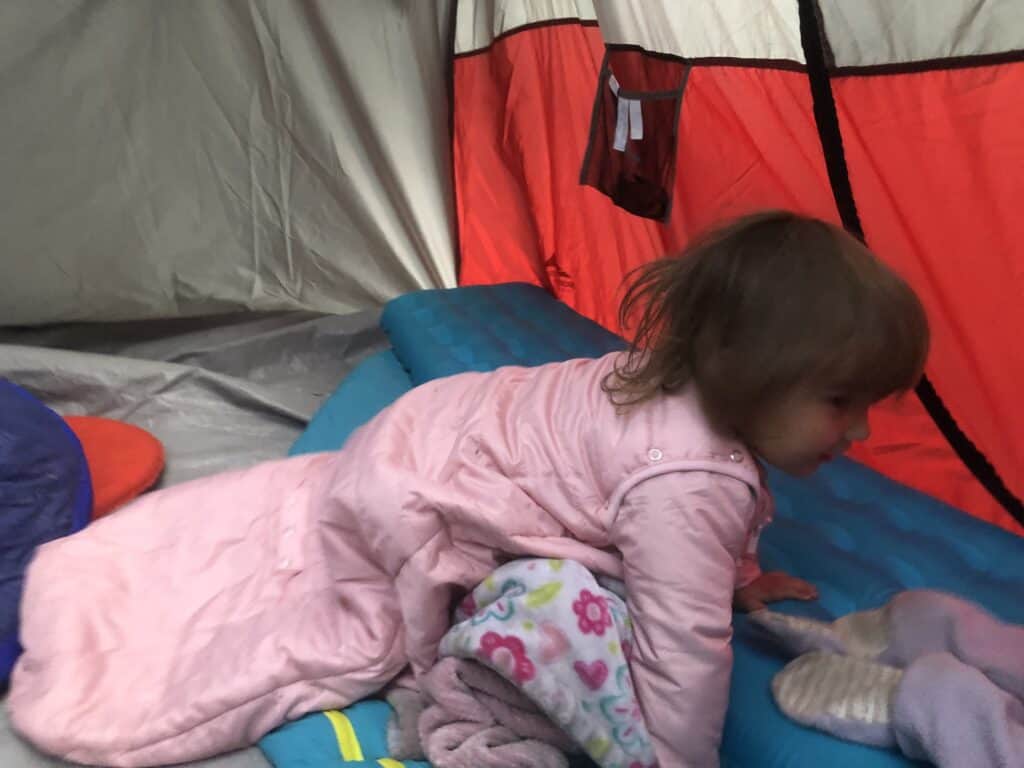
Sleep Setup Tips for Cold Weather Baby Camping
- Insulate from below first – put a foam sleeping pad or folded blanket under baby before worrying about what they’re wearing. Ground cold is sneaky.
- Tent placement matters – park your tent out of the wind and in a spot that gets morning sun. A sheltered spot can feel 10°F warmer than an exposed one.
- Warm the sleeping bag before use – tuck a hot water bottle (not too hot!) into the sleeping bag 10-15 minutes before baby goes in. Remove the water bottle before baby gets in.
- Co-sleeping in a camper or RV – if you have a trailer or RV with propane heat, this changes the equation entirely. Most RV setups let you keep the temperature comfortable regardless of outside temps. Check out my guide on baby sleep setup in an RV or camper.
- Check in at least once overnight – especially on your first cold weather camping trip with baby. A quick hand on the chest tells you everything you need to know.
Frequently Asked Questions
Can babies sleep in a tent when it’s cold?
Yes – with the right gear, babies can sleep safely and comfortably in a tent in cold weather. The key requirements are a proper merino wool base layer, a sleeping bag rated to the expected temperature, insulation between baby and the ground, and a hat for sleep. Check baby’s chest and neck during the night to make sure they’re staying at the right temperature.
What temperature is too cold for a baby to sleep in a tent?
Most healthy babies with proper gear can sleep comfortably in a tent down to about 20-30°F. Below that, the layering requirements become more challenging and the margin for error gets smaller. For most families, I’d suggest starting with camping trips where nighttime lows are above 40°F to get comfortable with the process before pushing into colder temps.
How do I keep my baby warm in a tent at night?
The three essentials are: a merino wool base layer (footie onesie is ideal), a properly rated baby camping sleeping bag, and insulation between baby and the ground. Add a wool hat, mittens, and additional fleece layers as temperatures drop. The Morrison Outdoors Little Mo 20° sleeping bag is the gold standard for this – it’s rated to 20°F and baby can’t kick it off during the night.
Can I use blankets to keep my baby warm while camping?
Loose blankets are a sleep safety risk for babies under 12 months and aren’t recommended. The good news is you don’t need them – a quality baby camping sleeping bag combined with proper layers underneath does a much better job anyway. The sleeping bag stays put all night in a way that blankets never will, and you’ll sleep much better not worrying about it.
How do I know if my baby is too cold while camping?
Check baby’s chest or the back of their neck – if it feels cold to the touch, they need another layer. Don’t rely on their hands and feet as a temperature indicator since extremities are often cool even when a baby is warm overall. Other signs of being too cold include unusual fussiness, pale skin, and cold ears or face.
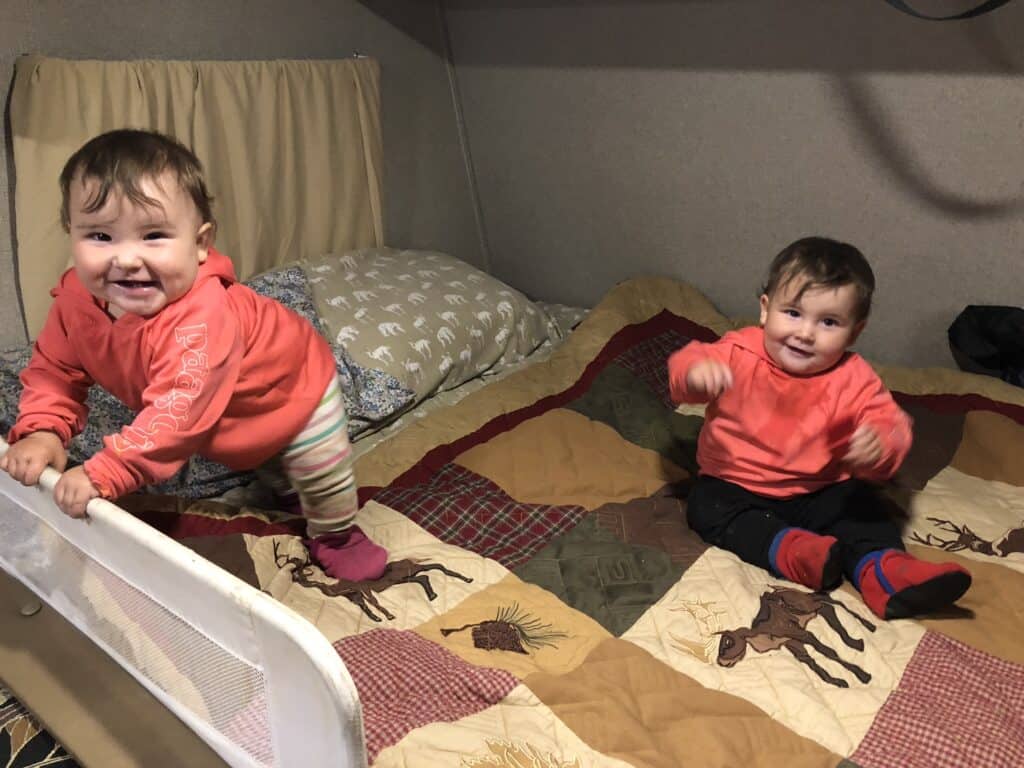
Cold weather camping with a baby is so much more doable than most people expect – it really does come down to having the right gear and knowing what to look for. Once you have a good base layer system and a quality sleeping bag sorted, you can focus on actually enjoying the campfire instead of worrying all night!
→ Shop the Morrison Outdoors Little Mo 20° Baby Sleeping Bag
More baby camping articles you’ll love:
- Best Baby Sleeping Bags for Camping (Full Guide)
- Baby Camping Checklist + Gear Guide
- 11 Must-Have Items for Taking Baby Camping
- 15 Tips for Camping With a Newborn Baby
- Best Baby Monitor for Camping (Roar Outdoors Review)